Let us learn about the working principle and function of Humic & Fulvic acids, then you will get the answer.
The principle and function of humic acid in adjusting soil pH:
Principle of Humic acid:
1. Humic acid is a natural organic macromolecular compound with a variety of active functional groups, such as carboxyl and phenolic hydroxyl. These functional groups can react with hydrogen ions (H⁺) and hydroxide ions (OH⁻) in the soil, thereby affecting the pH of the soil.
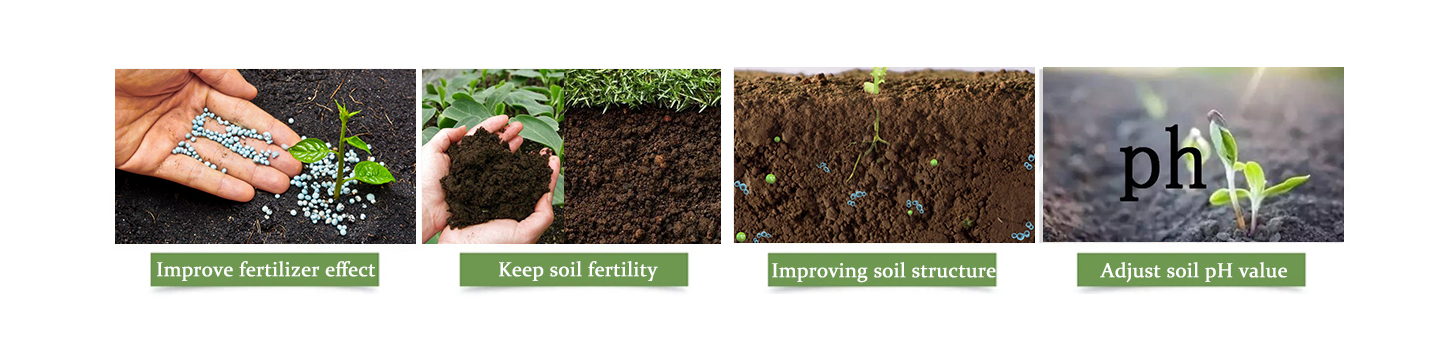
2. When the soil is more acidic, functional groups such as carboxyl in humic acid can bind to hydrogen ions in the soil to reduce soil acidity; when the soil is more alkaline, phenolic hydroxyl in humic acid can bind to hydroxide ions in the soil to reduce soil alkalinity.
Function of Humic acid:
1. Improve soil structure: Humic acid can promote the formation of soil aggregate structure, increase soil permeability and water retention, and provide a good living environment for soil microorganisms.
2. Improve soil fertility: Humic acid is rich in nutrients such as carbon, nitrogen, phosphorus, and potassium, which can provide nutrients for plant growth. At the same time, humic acid can also improve the effectiveness of nutrients in the soil and promote the absorption and utilization of nutrients by plants.
3. Enhance soil buffering capacity: Humic acid can increase the soil’s buffering capacity for changes in pH, so that the soil pH remains relatively stable.
The principle and function of Fulvic acid in adjusting soil pH:
Principle of Fulvic acid:
1. Fulvic acid is the component with the smallest molecular weight and the highest activity among humic acids. Its molecular structure contains more acidic functional groups such as carboxyl groups and phenolic hydroxyl groups. Therefore, fulvic acid plays a more significant role in adjusting soil pH than humic acid.
2. Fulvic acid can form complexes with metal ions in the soil, reducing the activity of metal ions in the soil, thereby reducing the impact of metal ions on soil pH.
Function of Fulvic acid:
1. Promote plant growth: fulvic acid can stimulate the growth of plant roots, improve plant resistance, and promote plant absorption and utilization of nutrients.
2. Improve soil microbial activity: fulvic acid can provide carbon sources and energy for soil microorganisms, promote the reproduction and activity of soil microorganisms, and thus improve the biological properties of the soil.
3. Enhance soil water and fertilizer retention capacity: fulvic acid can absorb water and nutrients in the soil, reduce the loss of water and nutrients, and improve the soil’s water and fertilizer retention capacity.
The method of using humic acid & Fulvic acid to adjust soil pH:
Application methods:
1. Humic acid and fulvic acid can be applied as basal fertilizer or topdressing. Basal fertilizer is generally applied to the soil before sowing or transplanting, and topdressing can be done during plant growth.
2. Humic acid and fulvic acid can also be applied by foliar spraying, but the effect of foliar spraying is relatively weak.
Application dosage:
The application dosage of humic acid and fulvic acid should be determined based on factors such as soil pH, fertility and crop needs, the recommended application dosage will be given in each product.
In short, humic acid and fulvic acid play a positive role in adjusting the pH of the soil, but during use, attention should be paid to selecting high-quality products, applying them reasonably, and using them in combination with other fertilizers to achieve the best results.

