In the competitive global cotton market—from the vast fields of Central Asia to the precision farms of the USA and Australia—growers are focused on two critical goals: increasing the number of harvested bolls and ensuring premium fiber characteristics. However, environmental stressors such as soil salinity, drought, and extreme heat often lead to significant boll shedding and reduced fiber strength.
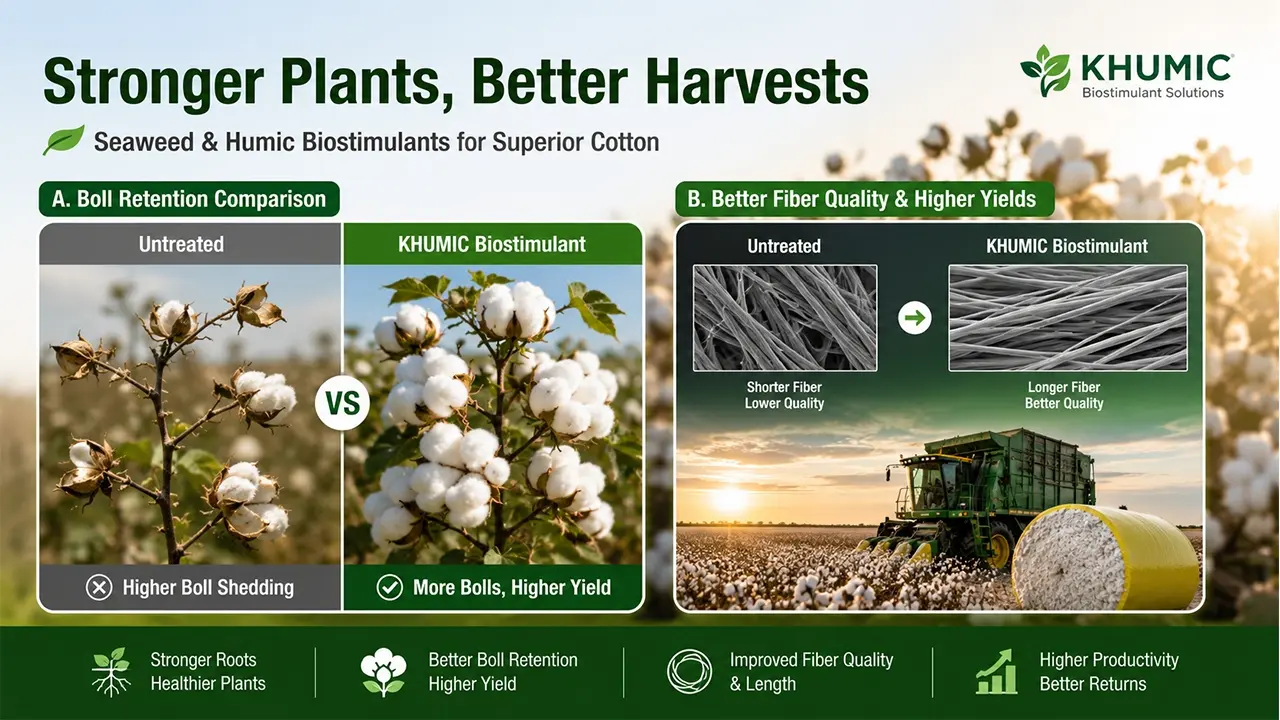
The solution lies in the synergistic application of Potassium Humate and Cold-Pressed Seaweed Extract, a combined biostimulant program that addresses both soil health and plant physiology.
One of the primary causes of yield loss in cotton is the premature drop of squares and bolls, often triggered by hormonal imbalances or nutritional stress during the peak flowering stage.
Fiber quality determines the grade and market price of cotton. The elongation and thickening of cotton fibers are energy-intensive processes that require optimal nutrient translocation.
Many major cotton-producing regions, particularly in Uzbekistan and Turkmenistan, struggle with soil salinity.
) in the soil. It forms complexes with salt ions, preventing them from entering the plant in toxic quantities.
To maximize ROI, KHUMIC recommends a targeted application schedule:
For large-scale industrial cotton production, the integration of KHUMIC biostimulants is a strategic move toward higher profitability. By improving the biological infrastructure of the soil and the physiological resilience of the plant, growers can achieve consistent, high-quality harvests that command a premium in the international market.
Secure your cotton yield. Contact KHUMIC’s technical experts today for a customized biostimulant program tailored to your region’s climate and soil profile.

