Solution
2026-05-17

Plant-Source vs. Animal-Source Amino Acids: Which is Better for Rapid Nutrient Absorption?

Amino acids are the “building blocks” of proteins and essential precursors for plant hormones and enzymes. In modern biostimulant programs, they are used to accelerate growth and help crops recover from stress. However, as the market expands, growers face a critical choice: Should they use plant-source or animal-source amino acids?

At KHUMIC, we specialize in plant-source enzymatic amino acids (such as our Aminomax 80 series), and here is why this distinction matters for your crop’s performance and safety.
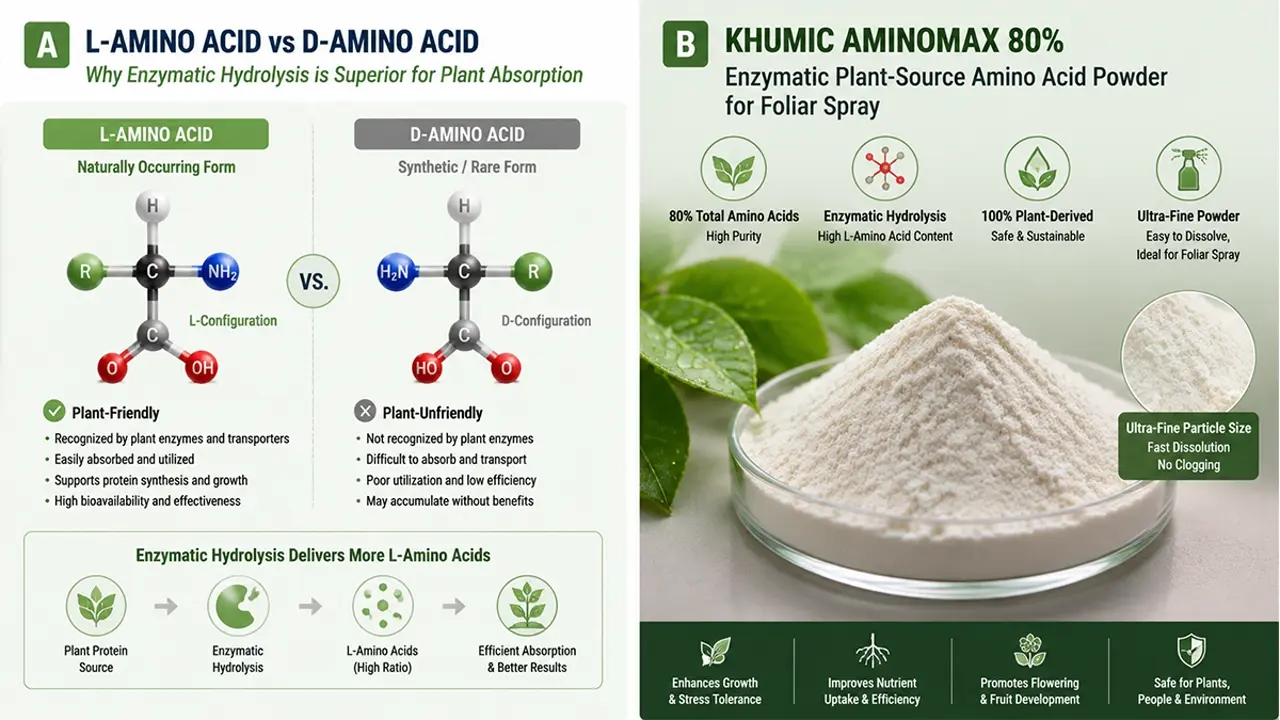
L-Amino acid vs D-Amino acid comparison: Why plant-source enzymatic hydrolysis amino acids are better for crop absorption - KHUMIC

1. The L-Amino Acid Advantage: Enzymatic vs. Chemical Hydrolysis

The most critical factor in amino acid efficacy is its “handiness” or chirality. Plants can only biologically utilize L-Amino Acids.

  • KHUMIC’s Enzymatic Hydrolysis: We use a gentle, low-temperature enzymatic process that preserves the natural L-configuration of the amino acids. This results in a product that is 100% bio-available to the plant.
  • Chemical Hydrolysis (Common in Animal-Source): Many animal-source products (derived from feathers, hair, or skin) are produced using harsh acids or alkalis at high temperatures. This process causes “racemization,” turning many L-amino acids into D-amino acids, which plants cannot use and which can even be toxic in high concentrations.

2. Purity and Safety: Avoiding Heavy Metals and Pathogens

For high-value fruit and vegetable exporters, residue and safety compliance are non-negotiable.

  • Plant-Source (Soybean/Grain): KHUMIC’s plant-source amino acids are naturally free from the heavy metals (such as Lead, Arsenic, and Chromium) often found in animal byproduct processing.
  • Animal-Source Risks: Animal-derived products carry risks of pathogen contamination and often contain high levels of chlorides and salts from the chemical extraction process, which can lead to soil salinization and leaf burn in foliar applications.

3. Phyto-Compatibility: Why Plants Prefer Plants

Plants have evolved to recognize and assimilate nutrients that match their own biochemical profile.

  • Comprehensive Profile: Plant-source amino acids offer a more balanced ratio of Glutamic Acid, Aspartic Acid, and Proline—the specific amino acids that drive chlorophyll synthesis and pollen germination.
  • Organic Chelator: Our Aminomax 80% powder acts as a high-capacity organic chelator. It binds with micronutrients (Fe, Zn, Mn, Cu) to form stable complexes that are absorbed by the plant significantly faster than synthetic EDTA chelates.

4. Rapid Stress Recovery and Metabolic Support

When a crop is under “abiotic stress” (heat, drought, or cold), it stops producing its own amino acids to save energy.

By applying KHUMIC plant-source amino acids, you provide the plant with “pre-fabricated” building blocks. This allows the plant to bypass the energy-intensive process of nitrogen assimilation, enabling instant recovery and maintaining growth momentum even under challenging conditions.

Conclusion: The Professional Choice for High-Value Agriculture

While animal-source amino acids may offer a lower price point, the hidden costs of low bio-availability, high salt content, and potential contamination make them a risky choice for professional orchards.

For growers targeting the premium export market, KHUMIC’s Plant-Source Enzymatic Amino Acids provide the purity, activity, and safety needed to maximize ROI and crop health.

Upgrade your nutrition program. Contact KHUMIC today to explore our Aminomax series and request a technical data sheet.

Home Tel Mail Inquiry