In the landscape of modern large-scale agriculture, cereal crops like wheat, rice, and corn are the backbone of global food security. However, these crops are also the largest consumers of synthetic nitrogen fertilizers. The challenge for 2026 is clear: How can farmers maintain high yields while reducing the economic and environmental costs of nitrogen loss?
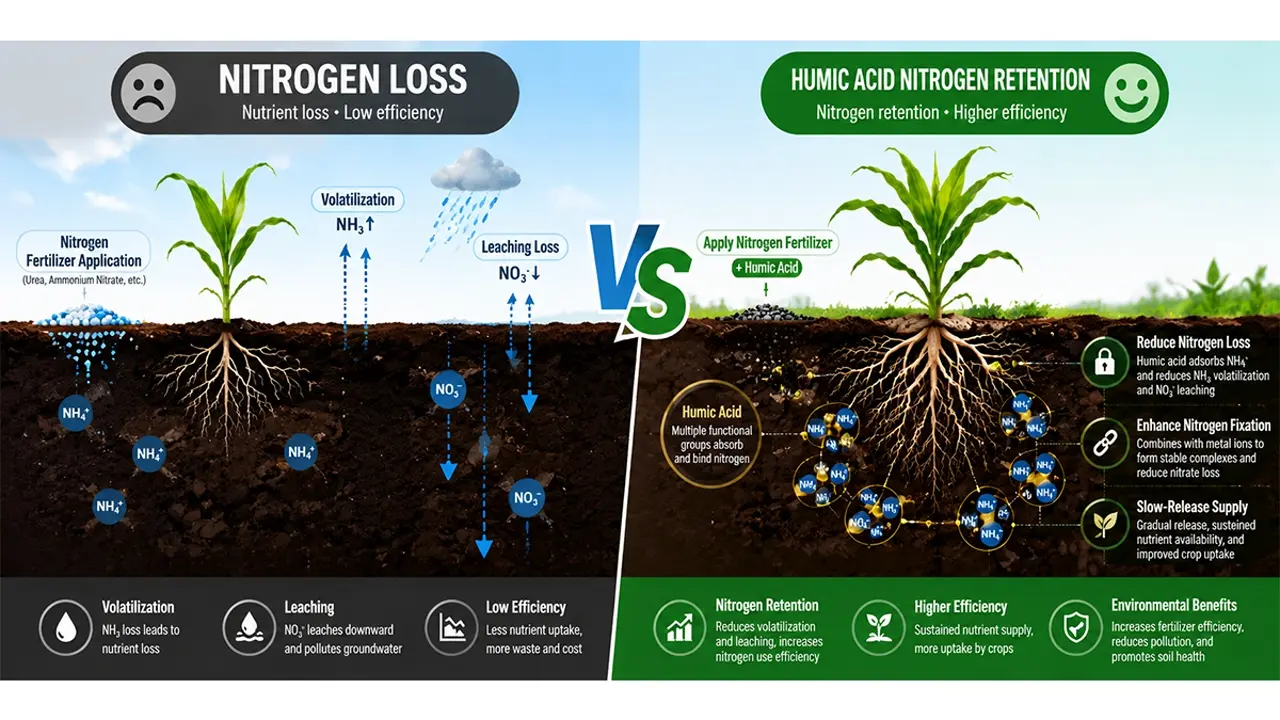
The answer lies in the integration of Potassium Humate—a powerful biological synergist that transforms how cereal crops interact with nutrition.
Standard chemical nitrogen fertilizers (such as Urea or UAN) are notoriously inefficient. In many large-scale farming systems, up to 50-70% of applied nitrogen is lost to the environment through leaching, runoff, or volatilization. This is not just an environmental issue; it represents a significant financial loss for the grower.
Potassium humate for wheat and rice serves as a chemical “buffer” and “storage tank,” significantly closing this efficiency gap.
Potassium humate works through several biochemical mechanisms to enhance Nitrogen Use Efficiency (NUE):
) more tightly, preventing them from being washed away by heavy rains or irrigation.
In wheat production, early-stage root development and tillering are critical. Applying potassium humate during the seedling or tillering stage ensures that nitrogen is available during the peak demand period.
Rice cultivation often faces severe nitrogen leaching due to flooded paddy conditions. Potassium humate stabilizes nitrogen in the anaerobic soil layer.
For large-scale operations, the primary value of potassium humate is cost reduction per hectare.
As the price of synthetic fertilizers remains volatile and environmental regulations tighten, the strategic use of KHUMIC Potassium Humate is no longer optional—it is a competitive necessity. By investing in Nitrogen Use Efficiency, you are not just growing a crop; you are optimizing your entire financial and ecological infrastructure.
Explore KHUMIC’s range of professional-grade potassium humate solutions and start maximizing your cereal crop ROI today.

