In the competitive global cherry market, growers are increasingly turning to innovative biostimulants to gain a professional edge. Fulvic acid, a high-activity organic compound, has emerged as a cornerstone of modern orchard management. With its unique low-molecular-weight structure, it offers a sustainable solution to boost yields while significantly enhancing the premium characteristics of cherry fruits.
1. Enhancing Fruit Quality: Brix, Color, and Uniformity
The market value of cherries is driven by three factors: sweetness, visual appeal, and size. Fulvic acid acts as a powerful natural chelating agent, ensuring that essential micronutrients (such as Zinc, Iron, and Manganese) are readily absorbed by the tree.
- Sugar Accumulation (Brix Levels): Fulvic acid facilitates the translocation of carbohydrates, resulting in fruits with higher sugar content and superior taste.
- Vibrant Color Development: By stimulating anthocyanin synthesis, it helps cherries achieve that deep, vibrant red or mahogany color that consumers demand.
- Size Uniformity: Field studies indicate that treated orchards produce more consistent sizing, reducing sorting waste and increasing total marketable yield.
2. A Biochemical Catalyst for Tree Metabolism
From a physiological perspective, fulvic acid functions as a metabolic catalyst. It doesn’t just provide nutrients; it optimizes how the tree uses them.
- Photosynthetic Efficiency: It enhances chlorophyll production and enzyme activity, allowing the tree to produce more energy even under sub-optimal conditions.
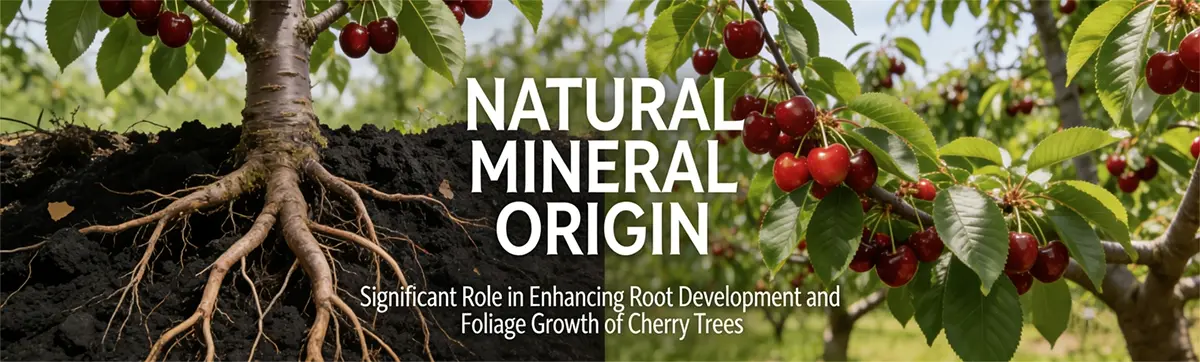
- Root Development & Nutrient Assimilation: Fulvic acid improves cellular respiration and increases root mass, ensuring the tree remains vigorous during critical stages like flowering and fruit set.
- Stress Resilience: It helps cherry trees navigate abiotic stressors such as late spring frosts or summer heatwaves, protecting the year’s investment.
3. Strategic Application for Optimal Results
To unlock the full potential of fulvic acid in cherry cultivation, timing is everything. Integration should be synchronized with the tree’s most energy-intensive phases:
- Pre-Flowering & Fruit Set: To ensure strong bud formation and reduce fruit drop.
- Fruit Expansion & Maturation: To maximize size and accelerate sugar accumulation.
Application Methods:
- Drip Irrigation (Fertigation): 5-10 kg per hectare to improve soil structure and CEC (Cation Exchange Capacity).
- Foliar Spraying: A 1:1000 dilution for rapid nutrient delivery during peak growth periods.
Conclusion: A Sustainable Future for Cherry Orchards
The evidence is clear: fulvic acid is an essential tool for the modern cherry grower. By combining natural, sustainable methods with high-performance biochemistry, growers can achieve superior fruit characteristics and higher ROI.

